The Ultimate FAQ on Body Contouring Farmington Hills
@daltonsicl346
September 25, 2026 · 15 min read

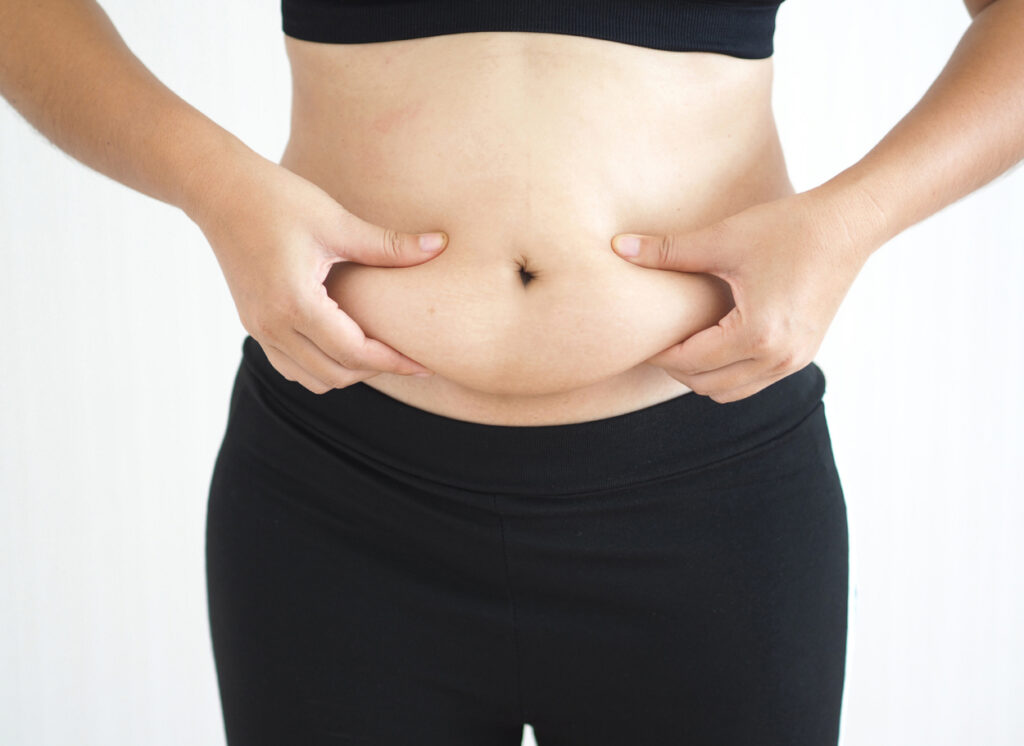
Body contouring is one of those categories that sounds straightforward until you sit down for a consultation and realize how many different treatments fall under the same umbrella. People usually arrive with a simple goal. They want their waistline to look smoother, the area under the chin to look tighter, or the stubborn fullness around the abdomen to look more proportional after weight loss or pregnancy. The questions, though, get specific very quickly.
That is especially true for anyone researching Body Contouring Farmington Hills options. The local market includes med spas, aesthetic clinics, plastic surgery practices, and wellness centers, all using similar language to describe very different services. A patient may think they are comparing one treatment to another, when they are actually comparing surgery to noninvasive fat reduction, skin tightening to muscle stimulation, or temporary improvement to structural change.
The best FAQ is the kind that clears away marketing language and gives people a practical frame for making decisions. That means talking honestly about what body contouring can do, what it cannot do, who tends to get the best results, and what patients often wish they had asked sooner.
What does body contouring actually mean?
Body contouring refers to treatments designed to improve shape, definition, and proportion in specific areas of the body. Sometimes the target is fat. Sometimes it is loose skin. Sometimes it is a combination of mild fat pockets, stretched tissue, and reduced muscle tone. The word "contouring" matters because these treatments are not primarily about changing the number on a scale. They are about changing how the body looks in clothing, in photos, and in the mirror.
In practical terms, body contouring may include noninvasive treatments like cryolipolysis, radiofrequency skin tightening, ultrasound-based fat reduction, and muscle-toning devices. It may also include minimally invasive options such as injectable fat-dissolving treatments for small areas. On the surgical side, liposuction, tummy tuck procedures, and body lift surgeries also fall under the broader contouring category.
When people search for Body Contouring Farmington Hills, they are often looking for a solution to one of three common frustrations. They have reached a stable weight but still have a resistant area that does not respond to diet and exercise. They have looser skin after pregnancy or weight loss. Or they want subtle refinement without surgery, scars, or a long recovery. Those are related concerns, but they are not identical, and the treatment choice should reflect that.
Is body contouring the same as weight loss?
No, and that distinction prevents a lot of disappointment.
Body contouring is best for reshaping areas, not for treating obesity or creating major total-body weight reduction. Most people who are happiest with their results are already fairly close to their goal weight. They may be healthy, active, and disciplined, but still bothered by fullness in the lower abdomen, flanks, thighs, upper arms, or under the chin.
A good consultation usually includes a reality check. If someone is hoping to lose 40 or 50 pounds, body contouring is not the first conversation. If they have already lost those 40 or 50 pounds and now want help with shape, skin laxity, or residual pockets of fat, then the conversation becomes much more productive.
It helps to think of body contouring as tailoring. If weight loss changes the size of the body, contouring refines the fit. That refinement can be dramatic in the right candidate, but it is not a substitute for foundational health habits.
What areas can be treated?
The answer depends on the technology or procedure, but the most commonly treated areas include the abdomen, love handles, thighs, upper arms, back, under the chin, and sometimes the buttocks or bra-line region. Some devices work better on pinchable fat. Others are designed mainly to tighten crepey skin or improve firmness.
A patient might come in asking for abdominal contouring and leave realizing the flanks are actually the bigger issue. That happens often. The eye reads proportion, not isolated anatomy. If the sides of the waist remain full, even a modest improvement there can make the midsection look much more defined overall. The same principle applies to the jawline. A small reduction under the chin can make the entire face appear lighter and more structured.
This is one reason experienced providers spend time assessing the whole silhouette rather than simply treating the spot the patient points to first.
Who is a good candidate for noninvasive body contouring?
The ideal candidate is not necessarily the person with the most to change. It is the person whose concern matches the strengths of the treatment.
In most clinics, the strongest noninvasive candidates tend to share a few traits:
- They are at or near a stable weight.
- They have localized areas of stubborn fat rather than generalized weight gain.
- Their skin still has enough elasticity to contract reasonably well.
- They understand that improvement is gradual and not equivalent to surgery.
- They are willing to maintain results with consistent lifestyle habits.
Patients outside that profile can still be treated, but expectations need more careful management. If skin is very loose, a fat-reduction treatment alone can sometimes leave the person looking deflated rather than tighter. If someone has significant visceral fat, meaning the fullness comes from inside the abdominal cavity rather than under the skin, external contouring devices may have limited visible impact. If weight fluctuates up and down, even a successful result can be short-lived.
What about surgical body contouring?
Surgical contouring has a different role. It is generally better for larger changes, more dramatic reshaping, and cases involving significant skin excess. Liposuction can remove more fat in a single session than a noninvasive device. A tummy tuck can tighten abdominal muscles and remove loose skin in a way no external treatment can replicate. Body lift procedures after major weight loss can transform comfort, mobility, and clothing fit.
The trade-off is obvious. Surgery involves anesthesia, more recovery, more cost, and real operative risk. It also tends to produce more visible and immediate changes when the indication is appropriate.
A surprisingly common mistake is assuming noninvasive equals better. Noninvasive often means easier recovery, but not necessarily better value if the underlying issue truly requires surgery. Someone with marked abdominal skin laxity may spend money on several rounds of noninvasive treatment and still remain unhappy because the root problem was not excess fat. It was stretched skin and tissue.
How long does it take to see results?
This depends on the treatment category.
With many noninvasive fat-reduction treatments, changes appear gradually over several weeks to a few months as the body processes treated fat cells. Skin-tightening results can also develop slowly because collagen remodeling is not immediate. Muscle-toning treatments may create an earlier sense of firmness, though visible definition still takes time and is strongly influenced by body fat percentage.
Surgical results are visible sooner in a broad sense, but they also evolve. Swelling can obscure the final contour for weeks or months. A patient may look "better" right away and still not see the true settled outcome until much later.
One of the more honest things a provider can say is this: body contouring rewards patience. People used to instant before-and-after photos often underestimate how much subtle, steady improvement can add up over a 12-week period.
Does body contouring hurt?
Most noninvasive treatments are tolerable, though comfort varies by device and by body area. Cooling treatments can feel intensely cold and numb at first. Radiofrequency and ultrasound devices may create heat, pressure, or a snapping sensation. Muscle stimulation can feel strange the first time, almost like a forceful involuntary workout. Injectable fat-dissolving treatments can cause temporary burning, swelling, and tenderness.
Surgical procedures, of course, involve a more significant recovery curve. Pain is only one part of that picture. Soreness, tightness, swelling, bruising, garment use, and activity restrictions all factor into the experience.
Patients often ask for a yes-or-no answer on pain, but the more useful question is whether the discomfort is manageable and worth the expected payoff. For most well-selected patients, the answer is yes. The key is walking in with a realistic understanding of what the process feels like, not relying on the phrase "lunchtime treatment" to tell the whole story.
Are the results permanent?
Some effects can be long-lasting, but permanent is a word that deserves caution.
When a treatment destroys fat cells, those particular cells do not typically return. That does not mean the body becomes immune to future weight gain. Remaining fat cells can still enlarge, and untreated areas can still accumulate more volume. Skin tightening can also improve firmness for a meaningful period, but skin continues to age. Pregnancy, hormonal changes, sun exposure, and fluctuations in weight all influence how long results hold.
The patients who keep their contouring results the longest tend to treat the procedure as a complement to healthy habits, not a replacement for them. Stable weight matters more than people think. Even a gain of 10 to 15 pounds can noticeably soften results, especially in smaller-framed patients.
How many sessions are usually needed?
There is no universal answer, and this is one of the first signs of whether a consultation is grounded in reality or driven by sales pressure. Some patients see satisfying change after one session. Others need a series, especially when the issue is mild skin laxity or when the treatment area is larger.
A smaller pocket under the chin and a broad lower abdomen are not comparable projects. Likewise, different technologies have different treatment plans. A reputable provider should explain not just how many sessions might help, but why. The reasoning should connect to your anatomy, not just to a package price.
If someone guarantees one treatment for everybody, that is a red flag. So is the opposite extreme, where every patient is automatically steered into a large multi-session commitment without a clear rationale.
What should you ask during a consultation in Farmington Hills?
The strongest consultations are surprisingly practical. They go beyond branding and get into anatomy, expected response, downtime, and backup plans if the first approach is not ideal.
A few questions are worth bringing to the appointment:
- What type of body issue am I treating here: fat, skin laxity, muscle tone, or a combination?
- Am I a better candidate for noninvasive treatment, minimally invasive treatment, or surgery?
- How many sessions do you realistically expect I will need?
- What kind of result should I expect, subtle, moderate, or dramatic?
- Who will perform the treatment, and how often do they treat this specific area?
Notice that none of those questions asks for the "best machine." Patients often get drawn into device names, but devices matter less than proper candidate selection and provider judgment. The best technology in the wrong patient can still produce mediocre results.
How do you choose a provider for Body Contouring Farmington Hills?
Start with experience, then verify fit. A provider who does a high volume of aesthetic work and can clearly explain the difference between skin laxity, subcutaneous fat, and deeper structural issues will usually give you a more useful assessment than someone reading from a treatment menu.
Look carefully at before-and-after photos, but read them with a critical eye. Were the cases similar to yours in body type and concern? Are the photos consistent in lighting, posture, and clothing? Is the improvement visible but believable? Overly dramatic photos can sometimes obscure how the average patient actually responds.
It is also worth paying attention to what happens when you ask a difficult question. Good providers do not get defensive when discussing limitations. They tell you when a treatment is likely to be modest, when a different option may be better, or when no procedure makes sense right now. That kind of restraint usually signals competence.
For patients exploring Body Contouring Farmington Hills, convenience matters, but it should not be the deciding factor. A shorter drive is nice. A strong assessment is better.
What is recovery really like?
Recovery is one of the most misunderstood parts of body contouring because people hear "no downtime" and imagine no aftereffects. In reality, many noninvasive procedures involve temporary swelling, redness, numbness, tenderness, tingling, or bruising. Most people can return to work and normal routines quickly, but they may still feel the treated area for days or even weeks.
That lingering altered sensation is not unusual. Patients are often more surprised by numbness than by pain. A person can function normally yet still notice that the abdomen feels odd when they bend or that the area under the chin feels puffy for longer than expected.
Surgical recovery is more involved, but it is also more predictable in some ways because the seriousness of the procedure is obvious from the start. Patients plan for time off, compression garments, movement restrictions, and follow-up care. With noninvasive contouring, the issue is often not severe downtime but underestimating how "not invisible" the process can be.
Are there risks or side effects?
Yes, and they should be discussed plainly.
Noninvasive treatments are generally lower risk than surgery, but lower risk is not no risk. Common side effects include temporary redness, swelling, bruising, numbness, soreness, and unevenness while the area settles. Some treatments can lead to prolonged tenderness https://riversewm283.birchreport.com/posts/body-contouring-farmington-hills-comparing-invasive-and-non-invasive-methods or sensitivity. Rare complications exist, and reputable practices should discuss them without minimizing their importance.
Surgery carries broader medical risks, including bleeding, infection, anesthesia-related complications, contour irregularities, delayed healing, and scarring. Those risks do not mean surgery is a bad choice. They mean surgery should be chosen for the right reasons and with full informed consent.
One of the most useful signs of a trustworthy consultation is specificity. Vague reassurance is less helpful than a clear explanation of what commonly happens, what rarely happens, and what the office does if a patient needs extra follow-up.
How much does body contouring cost in Farmington Hills?
Pricing varies widely because the category itself is so broad. A small noninvasive area may cost a few hundred to a few thousand dollars depending on the technology and number of sessions. Multi-area treatment plans can climb quickly. Surgical procedures are more expensive up front, but in some cases they offer better value because they address the problem more completely in one setting.
Cost should always be considered alongside expected outcome. A lower-priced treatment that cannot realistically meet your goal is not cheaper in the long run. On the other hand, not every patient needs the most aggressive option available. The best financial decision is often the treatment level that matches the problem accurately the first time.
Ask for clarity on what the quote includes. Consultation fees, garments, touch-ups, follow-up visits, and multiple sessions can affect the total more than people realize.
Can body contouring help after pregnancy or major weight loss?
Often, yes, but this is where treatment selection becomes especially important.
After pregnancy, some patients are dealing with a little lower-abdominal fat and mild skin laxity. Others have significant muscle separation, stretched skin, and tissue changes that no external device can fully correct. After major weight loss, the issue is even more often excess skin rather than fat alone.
A good provider will distinguish between "you can improve this" and "you can fully correct this." Those are different promises. Noninvasive treatment may be a sensible option for someone with modest looseness who wants gradual improvement and minimal disruption. A patient with hanging skin folds, recurrent irritation, or pronounced tissue redundancy may be far better served by surgery.
There is no shame in either path. The right answer depends on anatomy, tolerance for downtime, budget, and how much change the patient wants to see.
What can you do to maintain results?
Maintenance is where outcomes either hold or slowly drift.
The simplest formula is not glamorous. Stable weight, regular movement, resistance training, good protein intake, adequate hydration, and consistent sleep all support better long-term body composition and skin quality. If someone uses contouring to get over a frustrating plateau, then returns to erratic eating and prolonged inactivity, the body usually tells that story sooner rather than later.
This is also why many experienced clinicians prefer treating patients after their weight has been stable for at least a few months. Stability gives the result a fair chance to last and makes the before-and-after comparison more meaningful.
What is the biggest misconception about body contouring?
The biggest misconception is that the treatment itself determines the result. In real practice, candidate selection determines a huge portion of the result before the first session even starts.
A person with realistic expectations, localized treatable fullness, decent skin elasticity, and a stable lifestyle often does very well. A person chasing large-scale weight loss, dramatic skin tightening, or instant transformation from a mild device usually ends up disappointed, even if the treatment was performed correctly.
That is why the best body contouring experiences tend to begin with a provider saying something thoughtful, not something flashy. Sometimes that sounds like, "You are a very good candidate." Sometimes it sounds like, "This may improve things, but only modestly." And sometimes it sounds like, "I do not think this is the right treatment for you."
For anyone evaluating Body Contouring Farmington Hills, that level of honesty is worth more than a promotional special or a polished sales pitch. Good contouring is part science, part aesthetic judgment, and part expectation management. When those three pieces line up, the results can be genuinely satisfying, subtle in the best way, and lasting enough to feel worthwhile every time you get dressed.
Aesthetic Plastic Surgery & Laser Center, Michelle Hardaway M.D.
Address: 27920 Orchard Lake Rd, Farmington Hills, MI 48334
Phone number: +12482211957
FAQ About Body Contouring Farmington Hills
What does body contouring actually do?
Body contouring (or body sculpting) eliminates stubborn localized fat, tightens loose, sagging skin, and reshapes your silhouette. It is not a weight-loss tool, but rather a cosmetic procedure used to refine and tone specific trouble spots after major weight loss, pregnancy, or aging.
How much does body contouring usually cost?
The total cost of body contouring usually ranges from $2,000 to $25,000+ depending entirely on whether you choose non-surgical sessions or major surgical procedures.
Because "body contouring" covers everything from simple fat-freezing to comprehensive post-weight-loss surgeries, pricing is heavily categorized by the method used.
What is the best type of body contouring?
Liposuction is a huge topic and worth discussing in more detail, but in terms of body contouring and sculpting, nothing does the job better than liposuction, particularly VASER liposuction.